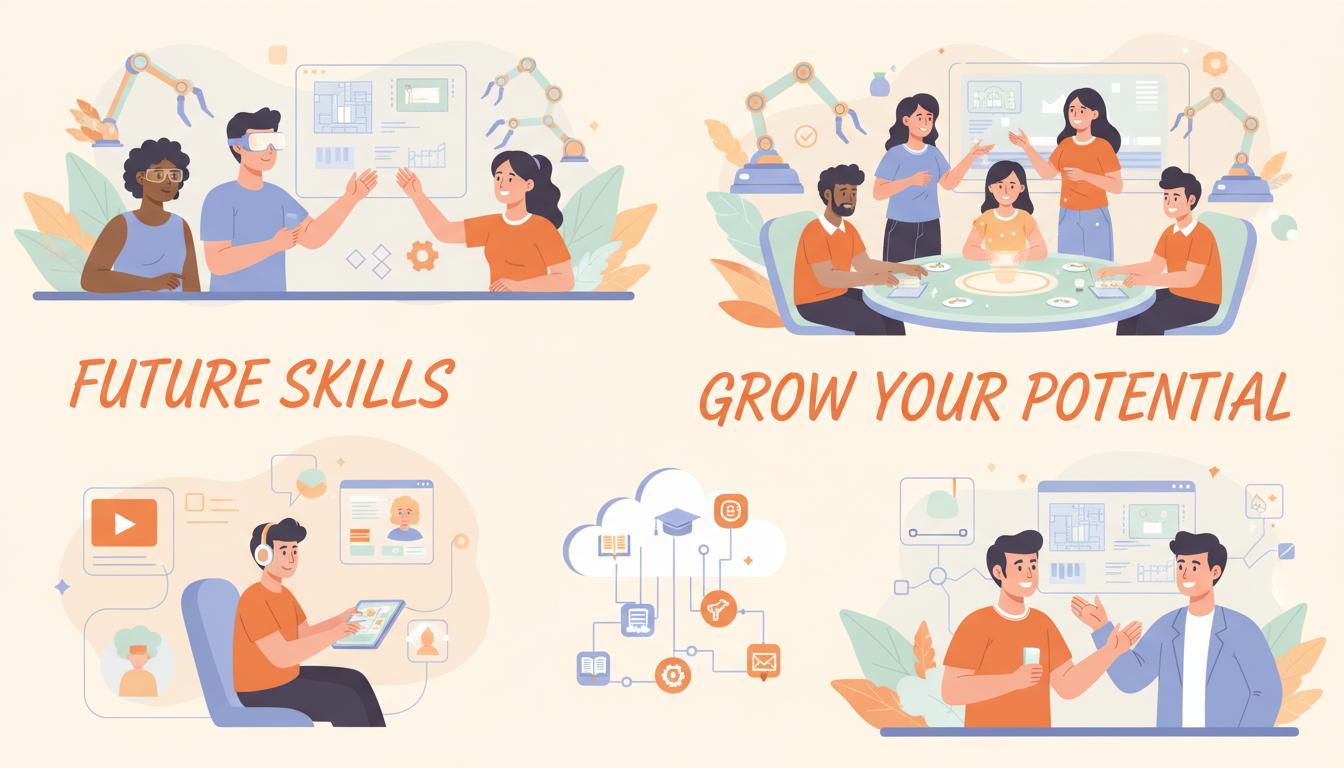
The job market is evolving rapidly due to technological advances, changing work patterns, and global shifts. Understanding which skills will be in demand can help you prepare for future career opportunities and stay competitive in your field.
Why Future Skills Matter
The World Economic Forum estimates that 50% of all employees will need reskilling by 2025. This trend continues as automation, artificial intelligence, and remote work reshape how we work.
Developing future-ready skills helps you:
- Stay relevant in your current role
- Qualify for new job opportunities
- Command higher salaries
- Adapt to industry changes
- Build career resilience
Digital and Technical Skills
1. Data Analysis and Interpretation
Every industry generates massive amounts of data. The ability to analyze, interpret, and make decisions based on data is becoming essential across all fields.
Key Areas to Learn:
- Basic statistics and data visualization
- Excel and Google Sheets advanced functions
- SQL for database queries
- Tools like Tableau or Power BI
- Understanding of data privacy and ethics
2. AI and Machine Learning Literacy
You don't need to be a programmer, but understanding how AI works and how to use AI tools effectively will be crucial.
What to Focus On:
- Understanding AI capabilities and limitations
- Using AI writing and productivity tools
- Prompt engineering for AI systems
- AI ethics and responsible use
- Identifying AI-generated content
3. Cybersecurity Awareness
As digital threats increase, every employee needs basic cybersecurity knowledge to protect themselves and their organizations.
Essential Knowledge:
- Recognizing phishing and social engineering
- Password security and two-factor authentication
- Safe browsing and email practices
- Data protection and privacy laws
- Incident reporting procedures
4. Cloud Computing Basics
Most businesses are moving to cloud-based systems. Understanding cloud platforms and services is increasingly valuable.
Areas to Explore:
- Google Workspace or Microsoft 365
- Cloud storage and file sharing
- Basic understanding of AWS, Azure, or Google Cloud
- Remote collaboration tools
- Cloud security best practices
Soft Skills and Human Abilities
1. Critical Thinking and Problem-Solving
As AI handles routine tasks, human ability to think critically, analyze complex problems, and develop creative solutions becomes more valuable.
How to Develop:
- Practice questioning assumptions
- Learn different problem-solving frameworks
- Engage in debates and discussions
- Take on challenging projects
- Study case studies in your field
2. Emotional Intelligence
The ability to understand and manage emotions?both your own and others'?is crucial for leadership, teamwork, and customer relations.
Key Components:
- Self-awareness and self-regulation
- Empathy and social awareness
- Effective communication
- Conflict resolution
- Motivation and influence
3. Adaptability and Learning Agility
The pace of change means you'll need to continuously learn new skills and adapt to new situations throughout your career.
Building Adaptability:
- Embrace change as an opportunity
- Develop a growth mindset
- Practice learning new skills regularly
- Seek feedback and act on it
- Stay curious and ask questions
4. Cross-Cultural Communication
Remote work and global teams make the ability to communicate effectively across cultures increasingly important.
Skills to Develop:
- Cultural sensitivity and awareness
- Clear, concise communication
- Active listening skills
- Virtual communication etiquette
- Language learning (if applicable)
Industry-Specific Skills
Healthcare
- Telemedicine and digital health tools
- Health data analysis
- Patient experience design
- Medical AI and robotics understanding
Education
- Online teaching and course design
- Educational technology integration
- Personalized learning approaches
- Digital assessment methods
Finance
- Cryptocurrency and blockchain basics
- Fintech applications
- Regulatory technology (RegTech)
- Sustainable finance and ESG
Marketing
- Digital marketing automation
- Content creation and storytelling
- Social media strategy
- Customer data analysis
Green and Sustainability Skills
Environmental Awareness
As organizations focus on sustainability, understanding environmental impact and green practices becomes valuable across industries.
Areas to Learn:
- Carbon footprint assessment
- Sustainable business practices
- Renewable energy basics
- Circular economy principles
- Environmental regulations
How to Develop These Skills
1. Online Learning Platforms
Take advantage of online courses and certifications:
- Coursera and edX for university-level courses
- LinkedIn Learning for professional skills
- Udemy for technical skills
- YouTube for free tutorials
- Industry-specific platforms
2. Professional Development
- Attend industry conferences and webinars
- Join professional associations
- Participate in workshops and training
- Seek mentorship opportunities
- Network with professionals in your field
3. Hands-On Practice
- Volunteer for projects that use new skills
- Start personal projects
- Join online communities and forums
- Practice with real-world scenarios
- Teach others what you learn
4. Formal Education
- Consider additional certifications
- Pursue relevant degree programs
- Attend bootcamps for intensive learning
- Take continuing education courses
Creating Your Skill Development Plan
Step 1: Assess Your Current Skills
Honestly evaluate your current abilities and identify gaps in your skill set.
Step 2: Research Your Industry
Look at job postings in your field to see what skills are being requested.
Step 3: Prioritize Skills
Focus on skills that are:
- Most relevant to your career goals
- In high demand in your industry
- Buildable with your current resources
- Complementary to your existing strengths
Step 4: Create a Learning Schedule
Set aside regular time for skill development and stick to it.
Step 5: Track Your Progress
Keep a record of what you've learned and how you've applied new skills.
Staying Ahead of the Curve
Follow Industry Trends
- Read industry publications and reports
- Follow thought leaders on social media
- Subscribe to relevant newsletters
- Attend virtual events and conferences
Build a Learning Network
- Connect with other learners
- Join study groups or learning circles
- Find accountability partners
- Share knowledge with colleagues
Conclusion
The future belongs to those who can adapt and continuously learn. By developing a mix of technical skills, soft skills, and industry-specific knowledge, you'll be well-positioned for career success in the coming years.
Remember that skill development is a journey, not a destination. Start with one or two skills that align with your career goals, and gradually build your capabilities over time.
The key is to begin now. The skills you develop today will determine your opportunities tomorrow.
Ready to start your skill development journey?
Explore our other articles about digital skills and professional development.
View Learning Resources
Samuel is a technology educator and web strategist with 8+ years of experience helping developers, students, and creators navigate the digital world with practical, beginner-friendly guides.