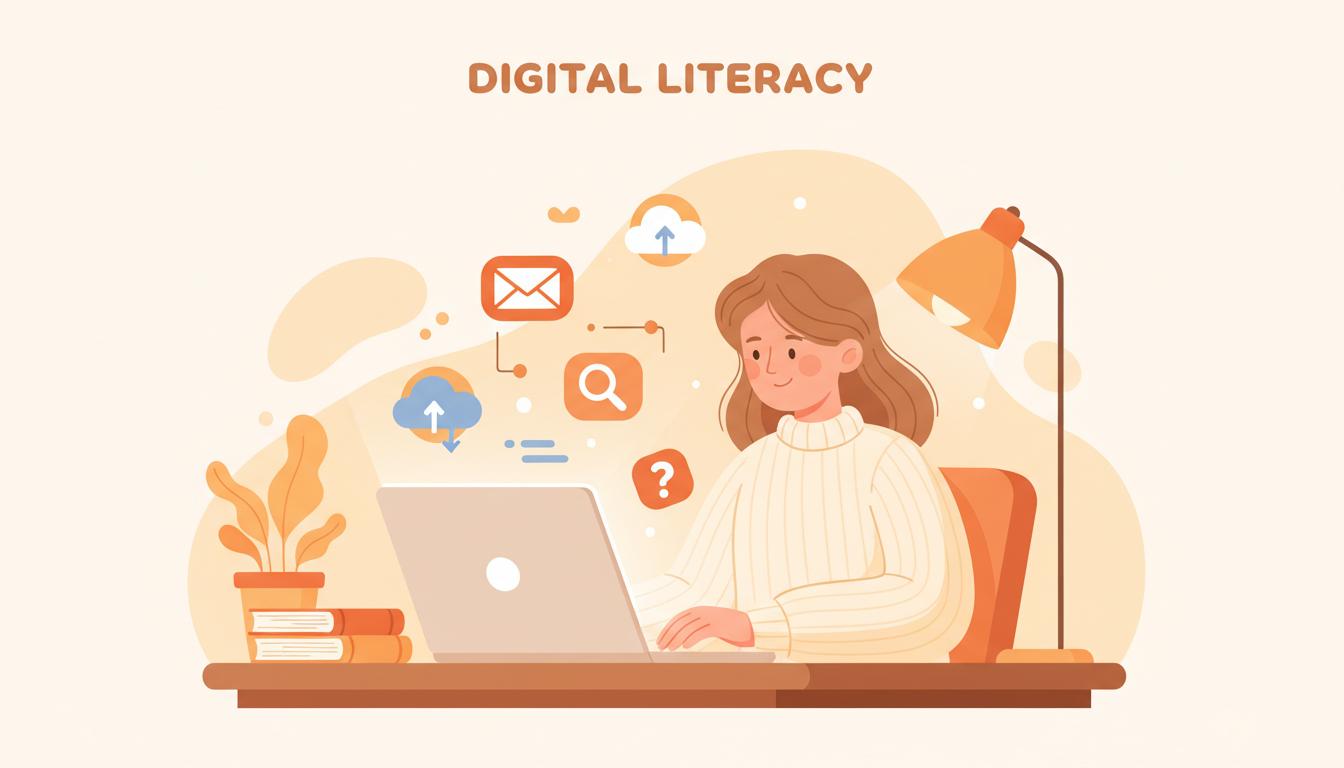
Digital literacy is the ability to use digital devices, the internet, and online tools safely and effectively. It helps people learn, work, and communicate in modern society.
In today's connected world, being digitally literate is no longer optional�it's essential. Whether you're applying for jobs, staying in touch with family, or accessing important services, digital skills are the key to participating fully in modern life.
What Does Digital Literacy Mean?
Digital literacy includes using computers and smartphones, searching information online, communicating via email, and protecting personal data. It encompasses a wide range of skills that help you navigate the digital world confidently.
Being digitally literate means you can:
- Navigate websites and use search engines effectively
- Send and receive emails professionally
- Use common software applications
- Understand online privacy and security basics
- Evaluate information found online critically
- Communicate through digital platforms
Why Digital Literacy Is Important
1. Improves Education and Learning
Digital literacy opens doors to endless learning opportunities. With online courses, educational videos, and digital libraries, you can learn almost anything from anywhere in the world. Students with strong digital skills can research more effectively and access resources that enhance their education.
2. Increases Job Opportunities
Most jobs today require some level of digital competence. From basic email communication to using specialized software, employers expect workers to be comfortable with technology. Digital literacy can significantly expand your career options and earning potential.
3. Promotes Online Safety
Understanding how to protect your personal information, recognize scams, and use strong passwords keeps you safe online. Digital literacy includes knowing how to identify trustworthy websites and avoid potential threats.
4. Enhances Communication
Digital tools allow you to stay connected with friends, family, and colleagues across the globe. Video calls, social media, and instant messaging have transformed how we communicate.
Examples of Digital Literacy Skills
Essential Digital Skills
- Sending emails - Writing clear, professional messages
- Using search engines - Finding accurate information quickly
- Managing files online - Organizing documents in cloud storage
- Understanding online privacy - Protecting personal information
- Video conferencing - Participating in virtual meetings
- Social media usage - Connecting responsibly online
How to Improve Your Digital Literacy
1. Practice Daily
The best way to improve is through regular use. Try to use digital devices every day, even if just for small tasks. The more you practice, the more comfortable you'll become.
2. Take Free Online Courses
Many platforms offer free courses on digital skills. Websites like Coursera, Khan Academy, and YouTube have tutorials for beginners covering everything from basic computer use to advanced software skills.
3. Stay Updated with Technology
Technology changes rapidly. Follow tech news, read blogs, and be open to learning new tools and applications as they emerge.
4. Ask for Help
Don't be afraid to ask friends, family, or colleagues for help when learning something new. Most people are happy to share their knowledge.
5. Join Online Communities
There are many online forums and communities where you can ask questions and learn from others who are also developing their digital skills.
Digital Literacy for Different Age Groups
Children and Teens
Young people often learn technology quickly but need guidance on online safety, privacy, and responsible digital citizenship.
Adults
Working adults need digital skills for career advancement, including professional communication, software proficiency, and online collaboration tools.
Seniors
Older adults can benefit greatly from digital literacy for staying connected with family, accessing healthcare information, and managing finances online.
Conclusion
Digital literacy is an essential skill in today's world. Whether you're a student, professional, or retiree, developing your digital skills will open new opportunities and help you navigate modern life with confidence.
Start with the basics, practice regularly, and don't be afraid to learn new things. The digital world is constantly evolving, and your journey to digital literacy is ongoing.
Remember, everyone starts somewhere. Take it one step at a time, and you'll be amazed at how quickly you can develop the skills you need to thrive in our digital age.
Samuel is a technology educator and web strategist with 8+ years of experience helping developers, students, and creators navigate the digital world with practical, beginner-friendly guides.